
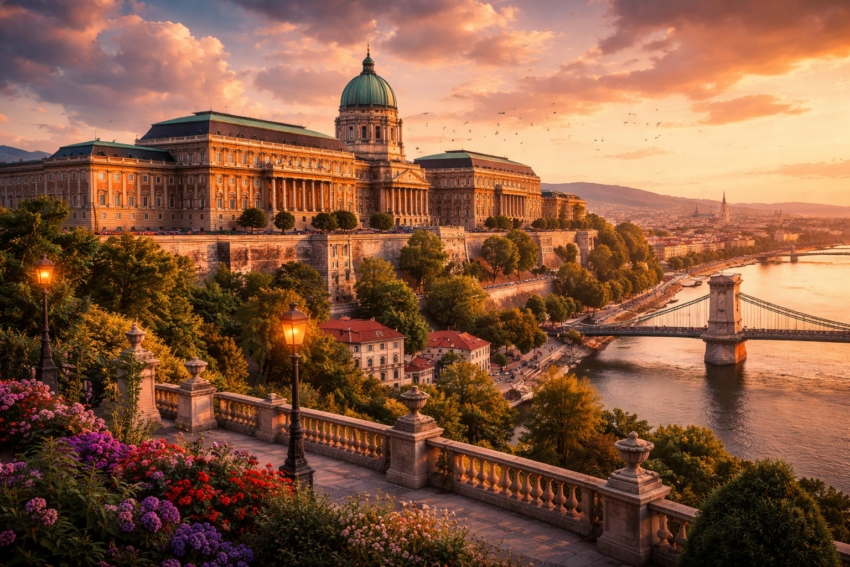
Discover the Royal Palace in Budapest—its history, architecture, art collections, and sweeping Danube views—in this elegant, immersive guide.
Table of Contents
Highlighting the Royal Palace in Budapest
Perched majestically above the sinuous curve of the Danube, the Royal Palace in Budapest—more formally known as Buda Castle—is not merely an architectural landmark. It is a narrative carved in stone, an enduring testament to Hungary’s royal lineage, cultural resilience, and artistic evolution. For discerning travelers who appreciate layered histories and refined beauty, this iconic complex offers a richly textured experience that goes beyond luxury and the unique rewarding both curiosity and contemplation.
A Regal Presence Above the Danube
Dominating the skyline on the western bank of the Danube River, Buda Castle commands immediate attention. Its elevated position is not incidental; it reflects centuries of strategic importance, once serving as both a defensive stronghold and a royal residence. Today, its sweeping terraces and stately façades offer some of the most breathtaking views in Central Europe, particularly at sunrise and twilight when the city’s golden hues come alive.
From across the river in Pest, the palace appears almost theatrical—its silhouette illuminated against the evening sky. This visual drama is enhanced by its harmonious relationship with the surrounding Chain Bridge, creating one of the most photographed vistas in the city.
A History Forged Through Triumph and Turmoil
The origins of Buda Castle date back to the 13th century, when King Béla IV ordered its construction following the devastating Mongol invasion. Over the centuries, successive rulers expanded and transformed the complex, leaving behind a palimpsest of architectural styles.
Under the reign of Matthias Corvinus in the 15th century, the palace flourished as a Renaissance court, rivaling the cultural sophistication of Italy. Later, during Ottoman occupation, much of the structure suffered damage, only to be rebuilt in the Baroque style under Habsburg rule in the 18th century.
The palace endured further destruction during World War II, particularly during the Siege of Budapest. Its subsequent reconstruction in the mid-20th century was meticulous, aiming to preserve its historic character while adapting it for modern cultural use. What stands today is a harmonious blend of eras—each layer contributing to its compelling narrative.
Architectural Grandeur and Design Nuance
At first glance, Buda Castle’s symmetry and scale evoke classical grandeur. Yet closer inspection reveals a nuanced interplay of styles. The Baroque influence is particularly evident in the palace’s sweeping courtyards and ornate detailing, while remnants of medieval fortifications hint at its earlier incarnations.
One of the most striking features is the dome, a commanding focal point that anchors the complex visually. Reconstructed in the 20th century, it maintains the elegance of its predecessors while incorporating subtle modern refinements.
The surrounding Castle District, or Buda Castle District, further enriches the experience. Cobblestone streets wind through a tapestry of pastel-colored buildings, Gothic churches, and intimate squares. This area is recognized as part of a UNESCO World Heritage Site, underscoring its global cultural significance.
A Cultural Epicenter
Today, Buda Castle is not a royal residence but a vibrant cultural hub housing several of Hungary’s most prestigious institutions. Chief among them is the Hungarian National Gallery, which occupies a significant portion of the palace. Its collections span centuries, showcasing Hungarian art from medieval altarpieces to modernist masterpieces.
Equally compelling is the Budapest History Museum, which offers a deep dive into the city’s past through archaeological finds, reconstructed rooms, and immersive exhibits. For those with a literary inclination, the National Széchényi Library provides a quieter, contemplative counterpoint, housing rare manuscripts and historical documents.
These institutions transform the palace into more than a static monument; they animate it with intellectual and artistic vitality.
Gardens, Terraces, and Panoramic Views
Beyond its interiors, Buda Castle’s outdoor spaces are equally captivating. The terraced gardens cascade down the hillside, offering tranquil retreats punctuated by statues and fountains. The Savoy Terrace is particularly noteworthy, providing an unobstructed panorama of the Danube and the bustling city below.
From this vantage point, one can appreciate the architectural dialogue between Buda and Pest—the former serene and historic, the latter vibrant and cosmopolitan. Landmarks such as the Hungarian Parliament Building and St. Stephen’s Basilica come into view, each contributing to the city’s distinctive skyline.
Experiencing the Castle: A Refined Approach
For visitors who value a curated experience, timing and pacing are essential. Early mornings offer a quieter atmosphere, allowing for unhurried exploration and photography. Evenings, on the other hand, reveal the palace in a more romantic light, as illumination enhances its architectural contours.
Access to the castle is itself part of the experience. The historic Budapest Castle Hill Funicular provides a charming ascent, combining convenience with a touch of nostalgia. Alternatively, a leisurely walk up the hill rewards visitors with evolving perspectives of the city.
Within the complex, guided tours can offer valuable context, particularly for those interested in the subtleties of Hungarian history and art. However, independent exploration allows for serendipitous discoveries—quiet corners, unexpected viewpoints, and moments of personal reflection.
A Living Symbol of Hungarian Identity
Perhaps what makes Buda Castle truly compelling is its role as a living symbol of Hungarian identity. It has witnessed the rise and fall of empires, the ebb and flow of cultural influences, and the resilience of a nation that has continually reinvented itself.
In many ways, the palace encapsulates the spirit of Hungary—a blend of tradition and innovation, grandeur and intimacy. It invites visitors not only to observe but to engage, to consider the historical forces that have shaped this remarkable city.
Seasonal Allure
Each season lends the castle a distinct character. In spring, the gardens bloom with fresh vitality, while summer brings open-air events and extended daylight hours. Autumn drapes the ancient walls in warm hues, creating a painterly landscape, and winter transforms it into a serene, almost ethereal setting—particularly when dusted with snow.
Festivals of Budapest
Festivals and cultural events throughout the year further animate the space, offering opportunities to experience Hungarian traditions in an authentic setting.
Some of the most renowned events held at the castle and throughout the city include:
- Festival of Crafts (August): A celebration of Hungarian folk art, crafts, and artisans.
- Buda Castle Beer Festival (June/Summer): Held in the open courtyards of the Royal Palace with various local and international brews.
- Buda Castle Easter Festival: A family-friendly event with folk music, dance shows, and traditional food like painted eggs and challah.
- Medieval and Renaissance Festival: Historical reenactments, jousting, and traditional markets.
- Sziget Festival (August): One of Europe’s largest music and cultural events, held on Óbuda Island
- Budapest Spring Festival (April–May): Features classical music, dance, and theater across the city
- Budapest Wine Festival (September): A major wine event located in the historic Buda Castle
- St. Stephen’s Day (August 20): National holiday with fireworks, parades, and free concerts
- Christmas Markets (Nov–Dec): Famously -Vörösmarty Square and St. Stephen’s Basilica
Practical Considerations
While the castle complex is expansive, it is well-organized and accessible. Comfortable footwear is advisable, as the terrain includes cobblestones and gentle inclines. Many areas are open to the public free of charge, while museums and exhibitions require admission.
Dining options within and around the Castle District range from casual cafés to refined establishments, allowing visitors to complement their cultural exploration with culinary indulgence.
An Enduring Impression
To highlight the Royal Palace in Budapest is to engage with a site that transcends simple categorization. It is at once a historical archive, an architectural masterpiece, and a cultural sanctuary. Its enduring appeal lies in its ability to offer something meaningful to every visitor—whether that is intellectual enrichment, aesthetic pleasure, or a moment of quiet awe.
For those who seek destinations that resonate on multiple levels, Buda Castle stands as an essential experience. It is not merely a place to visit, but a place to absorb, to reflect, and ultimately, to remember.
[ This article may contain links that provide the website with a small commission. ]

Rhonda Fletcher
Rhonda is an articulate hodophile, wine lover, and dedicated travel journalist and photographer. She focuses on culinary and cultural exploration, wildlife expeditions, ancient discoveries, and ecologically sustainable travel. Follow her exploits and shenanigans on X and Instagram: @rr_fletcher